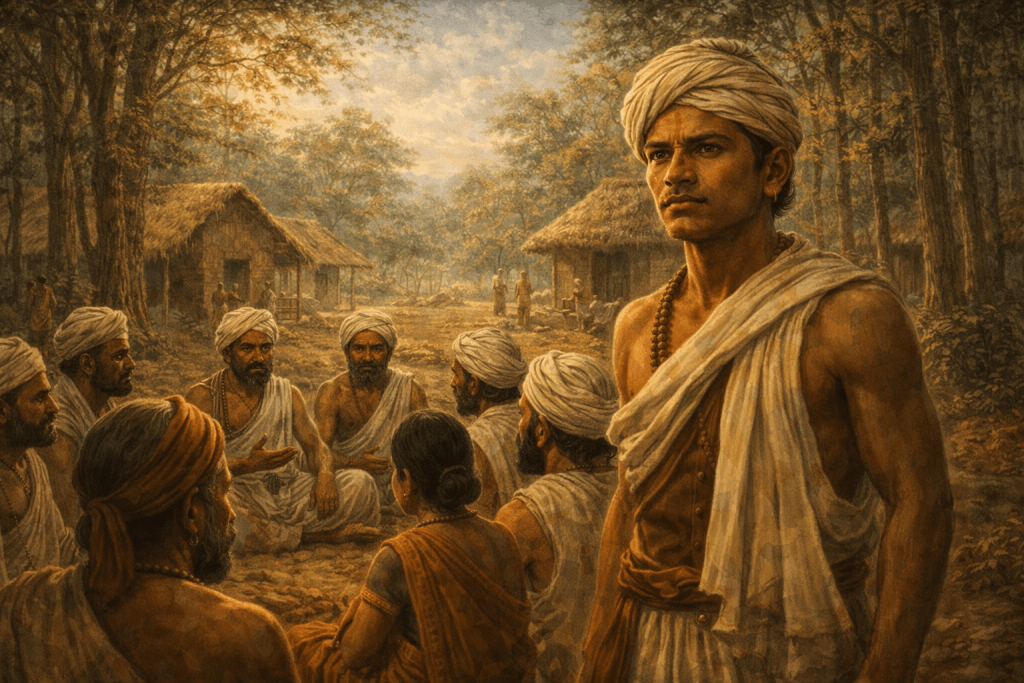
Born into a tribal community, Raghunath Singh Mandloi grew up surrounded by strong cultural traditions, deep respect for nature, and community-based values. From an early age, he witnessed the challenges faced by his people, which shaped his sense of justice, courage, and responsibility toward protecting tribal rights and identity.
Birth & Background
Born into a respected tribal community, Raghunath Singh Mandloi grew up in an environment deeply connected to forests, land, and ancestral traditions. His upbringing was shaped by strong cultural values and collective community life.
Cultural Influences
From an early age, he learned the importance of unity, traditional governance, and respect for nature. Tribal customs, rituals, and oral history played a vital role in shaping his identity and worldview.
Early Challenges
He witnessed the growing impact of British colonial policies on tribal lands and livelihoods. These early experiences awakened his awareness of injustice and strengthened his resolve to defend his people.
Foundations of Leadership
His courage, sense of responsibility, and commitment to justice began developing in his youth, laying the foundation for his future role as a resistance leader.
resistance mindset
Youth
Emerging Leadership
Demonstrated courage, confidence, and responsibility from a young age within his tribal community.
Spirit of Resistance
Developed a strong mindset against injustice, laying the foundation for future resistance efforts.
opposed British rule
Freedom Struggle
1850
Awakening of Resistance
Witnessed increasing colonial control over tribal lands, sparking early opposition.
1852
Mobilizing Communities
Began uniting tribal groups to collectively resist exploitation and administrative.
1854
Organized Opposition
Led structured efforts to challenge unfair taxation and restrictions on forest access.
1855
Strengthening Unity
Encouraged solidarity among villages, reinforcing courage and collective action.
1856
Open Defiance
Actively opposed British authority through organized resistance movements.
1857
Tribal Resistance
His efforts became part of the broader wave of resistance during independence.
Faced repression for resistance
Later Years
1858
Intensified Colonial Pressure
As his influence grew, British authorities began closely monitoring his activities. Tribal gatherings and resistance efforts were viewed as threats to colonial control.
1859
Crackdown on Movements
Colonial officials increased restrictions on tribal communities. Raids, arrests, and administrative actions were taken to suppress organized resistance.
1860
Harsh Repression
Due to his active leadership, Mandloi and his followers faced severe repression. Efforts were made to weaken tribal unity and dismantle resistance networks.
1861
Continued Defiance
Despite mounting pressure, he remained committed to defending tribal rights and refused to surrender his principles.
Turning Point
Legacy of Sacrifice
His suffering and resistance became a powerful symbol of courage. Rather than ending the movement, repression strengthened the determination of tribal communities.
tribal freedom hero
Present Day
Recognition in Local Memory
After India’s independence, Raghunath Singh Mandloi continued to be honored in tribal communities as a symbo.
Cultural Remembrance
Local gatherings, oral traditions, and community events preserve his story and celebrate his contribution to the freedom.
Inspiring Youth
His life is increasingly highlighted to educate younger generations about the role of tribal leaders in India’s independence.
Symbol of Tribal Pride
Today, he stands as a powerful symbol of indigenous identity, social justice, and unwavering commitment to freedom.